Stablecoin Cross-Border Payments: Cut Supplier Costs by 80%
June 16, 2025
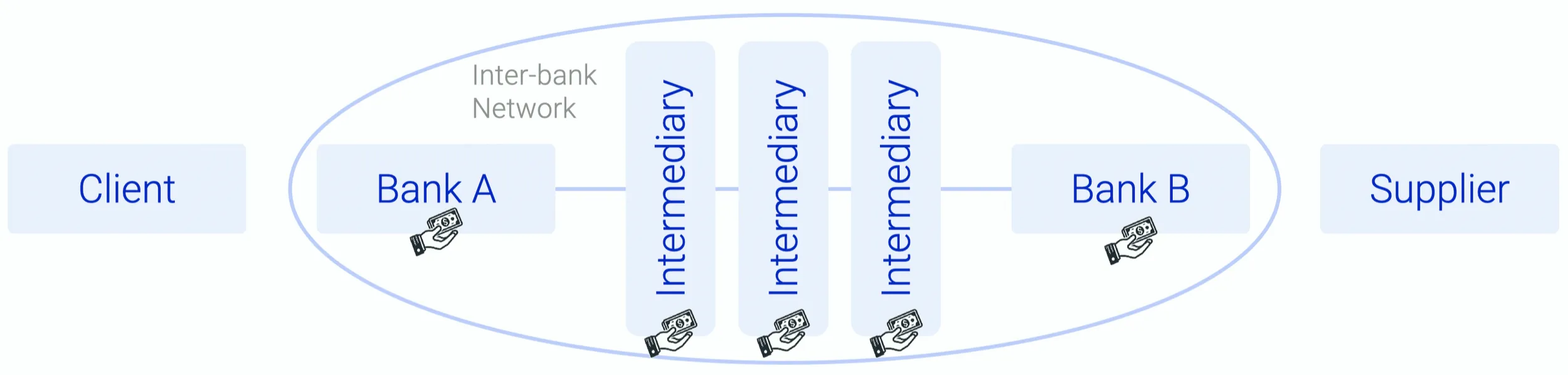
For decades, international B2B payments have relied on outdated infrastructure: SWIFT messages, FX spreads, correspondent banks, and cut-off times that ignore modern business needs. But that’s changing.
Today, stablecoins offer a viable, enterprise-ready alternative for instant, low-cost cross-border supplier payments.
The Problem: Cost, Delay & Uncertainty
Companies operating globally often face:
- 2–5 day settlement times through SWIFT
- High transaction costs, including FX spreads and banking fees
- Unpredictable timing, especially across time zones and banking holidays
- Manual reconciliation due to opaque tracking and delays
These inefficiencies tie up liquidity and introduce friction that’s especially painful in tight-margin or time-sensitive supply chains.
The Stablecoin-Based Solution
By paying suppliers directly in stablecoins like USDC, businesses unlock:
- <1-minute settlement time, even on weekends and holidays
- Global reach with transparent on-chain confirmation
- 24/7 payment operations, independent of banking hours
- Elimination of intermediaries, reducing costs by up to 97%
Suppliers receive funds directly into digital wallets, either self-custodied, enterprise-grade (e.g. Safe{Wallet}), or linked to card services like Gnosis Pay or Coinbase Business.

Business Value Delivered
| Benefit | Impact |
|---|---|
| Cost savings | ↓ up to 97% on fees and FX spreads |
| Liquidity unlocked | Faster working capital cycle (by 2–7 days) |
| Reconciliation simplified | Real-time, traceable payments on-chain |
| Audit-ready transparency | Every payment has a digital trail |
A Real-World Example
A digital manufacturing company based in Germany regularly pays suppliers in the USA, Eastern Europe, Mexico, and India. By switching from wire transfers to stablecoin payments:
- Monthly FX + wire costs dropped from €4,500 to under €800
- Days payable outstanding improved by 2.2 days
- Accounting now receives live payment confirmations via on-chain data feeds
Why This Matters Now
Regulatory clarity from frameworks like MiCAR in Europe and new U.S. stablecoin legislation allows enterprises to confidently integrate stablecoins into treasury operations.
And as companies like Uber, JPMorgan, and Stripe adopt stablecoin workflows, forward-thinking finance leaders are acting now, not later, to avoid being left behind.
This blog post is part of our series “Real Business. Real Impact.”, a deep dive into enterprise use cases for stablecoins: Cross-Border Supplier Payments, Crew Payroll at Sea, Loyalty with Stablecoins, FX Hedging, and Bunker Fuel Escrow.